
I remember sitting in my dorm at Georgia Tech, staring at a half-disassembled custom skateboard build, wondering why my battery pack was dying in twenty minutes when the math said it should last two hours. I had been looking at the labels, but I wasn’t actually looking at the load. Most people—and even some tech enthusiasts—treat energy consumption like a magic trick, relying on vague “estimated runtimes” or manufacturer specs that are basically just glorified marketing. If you want to actually build something sustainable, or even just stop overpaying on your utility bill, you can’t rely on guesswork; you need to master how to calculate electrical power usage based on real-world draw, not just what’s printed on the box.
I’m not here to give you a theoretical lecture that belongs in a dusty textbook. My goal is to strip away the corporate greenwashing and the overcomplicated jargon to show you the actual hardware reality. I’m going to walk you through the raw math and the practical steps to measure your own energy footprint, so you can stop guessing and start managing your power like a pro.
Mastering the Watts to Kilowatt Hours Formula

Look, if you’re trying to map out a full-scale home backup system or even just a DIY solar setup, you’re going to realize pretty quickly that manual math gets exhausting when you’re dealing with dozens of different loads. I’ve found that instead of just staring at a spreadsheet until my eyes bleed, it’s way more efficient to use a dedicated calculator to handle the heavy lifting. Honestly, if you’re looking for something quick and easy to run some numbers while you’re out and about, you might find some useful local insights or even just a quick distraction like sex near me to clear your head before diving back into the nitty-gritty technical specs. Just make sure you’re always double-checking the peak surge ratings, because that’s where most people’s math—and their battery banks—actually fail.
Look, if you want to move past the surface-level stuff and actually understand your energy footprint, you have to get comfortable with the math. Most people get stuck because they confuse instantaneous power with total energy used over time. Think of it like this: Watts are your speed (how fast you’re pulling energy right now), while kilowatt-hours are your distance (how much total energy you’ve actually traveled). To bridge that gap, you need the watts to kilowatt hours formula, which is essentially just multiplying your power draw by the time it’s running and dividing by 1,000.
When I’m calculating appliance power draw for a new setup—like when I’m modding an old skateboard or sizing a home backup system—I don’t just eyeball it. If you’ve got a 1,200-watt space heater running for three hours, you aren’t just using “a lot” of power; you’re pulling 3.6 kWh. Getting this right is the only way to stop the guesswork. If you can’t master this basic electrical energy consumption math, you’re never going to be able to accurately size a battery bank or predict your monthly bill.
Calculating Appliance Power Draw Without the Guesswork

Look, most people just glance at their utility bill and treat the total like some kind of mysterious tax they’re forced to pay. But if you actually want to get serious about calculating appliance power draw, you can’t just rely on gut feelings or “vibes.” You need to stop treating your home like a black box. Every device in your living space—from that high-end espresso machine to the charger I’m currently using for my skateboard—is pulling a specific amount of current. If you aren’t looking at the nameplate on the back of your gear, you’re just guessing.
The real trick to calculating household electricity consumption is realizing that not all “on” time is created equal. A laptop sitting in sleep mode is a different beast entirely compared to a space heater running on max. To do this right, you have to track the duty cycle. It’s not just about the peak wattage; it’s about how long that load is actually sustained. Once you nail down those variables, the math stops being a headache and starts being a tool you can actually use to optimize your setup.
Real-World Variables: Where the Math Actually Hits the Pavement
- Don’t trust the sticker on the back of your device. Manufacturers love to list the “peak” wattage, which is basically the maximum theoretical draw, but your actual usage will likely hover much lower. If you want accuracy, use a plug-in power meter to see what the device is pulling during a standard duty cycle.
- Account for the “vampire load” or standby power. Even when your gear is “off,” it’s often still sipping energy to keep those tiny LEDs glowing or to stay connected to Wi-Fi. In a large-scale system or a home setup, these micro-draws add up to a massive, invisible leak in your efficiency math.
- Factor in the temperature coefficient. As an EE, I can tell you that heat is the enemy of efficiency. If you’re running hardware in a hot garage or a poorly ventilated enclosure, the internal resistance increases, which can spike your power draw just to keep things running.
- Watch out for the startup surge. Inductive loads—like the motors in an e-bike or even a heavy-duty compressor—pull a massive spike of current the second they kick on. If you only calculate based on running wattage, you’re going to blow a fuse or trip a breaker when that initial surge hits.
- Always build in a 20% safety margin. Whether you’re sizing a battery bank for a van build or calculating the load for a new solar array, never design for 100% capacity. Real-world degradation and unexpected spikes mean you need that extra headroom if you don’t want your system to crash when you need it most.
Beyond the Spreadsheet: Why the Math Matters
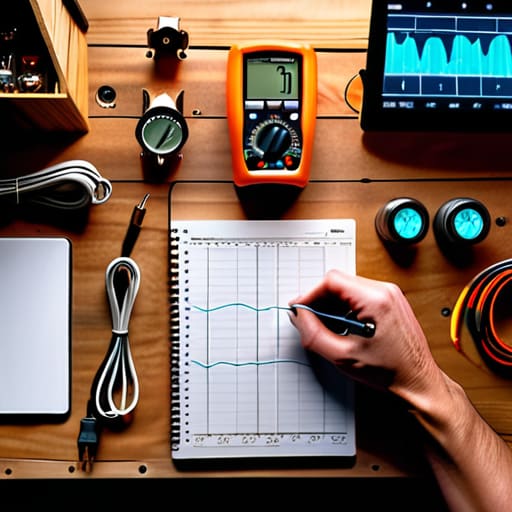
At the end of the day, calculating your power usage isn’t just some academic exercise for engineers; it’s about understanding the actual load profile of your life. We’ve walked through the conversion from raw wattage to kilowatt-hours and looked at how to strip away the guesswork when auditing your appliances. If you can’t accurately measure how much energy your hardware is pulling, you’re essentially flying blind. Whether you’re trying to size a home battery backup or just trying to figure out if your DIY electric skateboard build is going to fry a circuit, the math is your only source of truth. Stop relying on the “estimated” labels on the back of devices and start crunching the actual numbers to see how your consumption patterns really stack up.
We talk a lot about the “green revolution,” but a revolution built on bad data is just a PR stunt. To actually move the needle on sustainability, we need a generation of users who are technically literate and obsessed with efficiency over excess. When you master these calculations, you stop being just another consumer on the grid and start becoming someone who understands the hardware powering our future. Let’s stop settling for vague promises of “clean energy” and start building a system that is mathematically optimized and truly sustainable. The transition is coming; let’s make sure we’re ready for the load.
