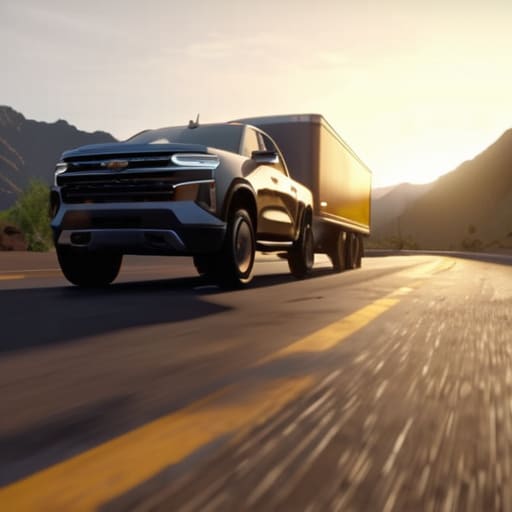
I remember sitting in my senior design lab at Georgia Tech, staring at a thermal imaging camera while a prototype battery pack basically tried to melt itself under a heavy load. It was a brutal reality check that no shiny marketing brochure ever mentions: pulling a heavy trailer isn’t just about how much weight the hitch can hold, it’s about how your battery chemistry handles the massive, sustained current draw. Most manufacturers will throw around a massive number for ev towing capacity, but they rarely talk about the thermal runaway or the catastrophic range drop that happens when you’re fighting wind resistance and gravity at the same time.
I’m not here to sell you on the dream of effortless electric hauling; I’m here to talk about the actual physics of it. In this breakdown, we’re going to look past the glossy spec sheets and dive into the real-world variables—like discharge rates, regenerative braking efficiency, and payload math—that determine if you’re actually going to make it to your destination or just end up stranded on the shoulder. We’re going to get uncomfortably honest about what your rig can actually do before the voltage sag hits.
Table of Contents
- Towing Weight vs Battery Life the Real Chemistry of Range
- Beyond the Spec Sheet Electric Truck Payload Capacity Realities
- The Real-World Playbook: How to Actually Tow Without Killing Your Battery
- The Bottom Line: What You Actually Need to Know
- The Physics Doesn't Care About Marketing
- The Bottom Line on Electric Hauling
- Frequently Asked Questions
Towing Weight vs Battery Life the Real Chemistry of Range

When you hook up a trailer, you aren’t just adding mass; you’re fundamentally changing the thermal and electrical profile of your entire powertrain. It’s not just about the extra weight slowing you down—it’s about how that weight forces the battery to work harder to maintain voltage under high discharge rates. When you’re pulling a heavy load up a grade, you’re pulling massive amounts of current from the cells. This creates internal resistance and heat, which is the enemy of longevity. If you’re constantly pushing the limits, you’re looking at accelerated electric vehicle range degradation towing scenarios that most marketing brochures conveniently ignore.
Then there’s the physics of energy recovery. In a standard commute, regenerative braking while towing can actually help recover some of that kinetic energy as you descend a hill, acting like a mild buffer. However, if the load is too heavy or the descent too steep, you hit a ceiling where the motor can’t pump energy back into the battery fast enough. You end up fighting the laws of thermodynamics just to keep the cells from overheating, which is why the relationship between towing weight vs battery life is much more complex than just a simple math equation on a spec sheet.
Beyond the Spec Sheet Electric Truck Payload Capacity Realities
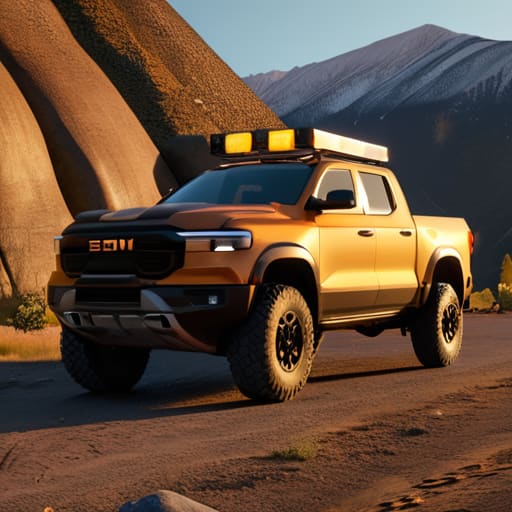
Here is the reality that most manufacturers won’t lead with in their brochures: there is a massive, often invisible tug-of-war happening between your trailer weight and your electric truck payload capacity. When you’re hauling a heavy load, you aren’t just dealing with physics; you’re dealing with the sheer mass of the battery pack itself. While that heavy floor-mounted battery gives you a lower center of gravity—which is great for stability—it also eats into the actual weight you can legally and safely put in the bed or on the hitch.
You also have to account for how that weight affects the mechanical strain on the vehicle. It’s not just about whether the motor can pull the load, but how the suspension and tires handle the combined mass of a full battery and a loaded trailer. If you push the limits, you’re looking at increased heat in the inverters and potentially faster towing efficiency electric motors loss due to the sheer energy required to overcome rolling resistance. Before you sign the papers on a new rig, stop looking at the max towing number and start looking at the net payload available once that massive battery is accounted for.
The Real-World Playbook: How to Actually Tow Without Killing Your Battery
- Stop trusting the highway range estimates. When you hook up a trailer, you’re essentially adding a giant, un-aerodynamic parachute to your vehicle. Expect your range to plummet by 40% to 50%—it’s not a glitch, it’s just physics.
- Watch your discharge rates like a hawk. Heavy towing forces the battery to dump current at a much higher rate to maintain speed, which generates massive amounts of heat. If you’re pushing through a mountain pass, you aren’t just losing range; you’re stressing the chemistry.
- Pre-condition is your best friend. If you’re heading into a tow, use the app to warm the battery pack while it’s still plugged into the grid. A warm battery has lower internal resistance, meaning it can handle those high-current draws much more efficiently.
- Plan your stops around DC fast chargers, not just “any” charger. Towing creates a massive thermal load, and if you arrive at a station with a scorching hot battery, the BMS (Battery Management System) might throttle your charging speed to a crawl to protect the cells.
- Mind the weight distribution, not just the total load. An improperly balanced trailer doesn’t just affect your handling; it changes the rolling resistance and the way your motors have to work to keep you upright, which ends up eating into your Wh/mi (Watt-hours per mile) efficiency.
The Bottom Line: What You Actually Need to Know
Forget the “estimated range” on your dashboard; when you’re hauling a trailer, you’re essentially doubling the load on your cells, which means you need to plan for a 40-50% drop in real-world mileage.
Payload isn’t just about the weight of the cargo; you have to account for the massive battery pack weight already baked into the chassis, which can leave you with less room for actual gear than the brochure suggests.
To avoid killing your battery’s long-term health, stop trying to “force” high-speed towing on a low charge—the thermal stress from high discharge rates during heavy climbs is exactly the kind of degradation we’re trying to avoid in the next generation of tech.
The Physics Doesn't Care About Marketing
“Look, a manufacturer can give you a massive number on a spec sheet all day long, but physics doesn’t take bribes. When you hitch up a trailer, you aren’t just adding weight; you’re forcing the battery to dump current at a much higher discharge rate, which creates heat and kills your efficiency faster than a bad cell chemistry. If you want to actually tow, you have to stop looking at the maximum capacity and start looking at how that load is going to wreck your usable range in the real world.”
Desmond Achebe
The Bottom Line on Electric Hauling

At the end of the day, towing with an EV isn’t just about checking a box on a spec sheet; it’s a complex dance between mass, thermal management, and discharge rates. We’ve looked at how the sheer weight of a trailer forces your battery to work overtime, driving up internal resistance and potentially accelerating degradation if you aren’t careful. You have to account for the diminishing returns of range when you add a load, and you definitely can’t ignore how much payload you lose to that massive battery pack sitting under the floor. If you ignore the physics of how much energy it takes to move a heavy object through air resistance, you’re going to end up stranded with a very expensive paperweight.
Despite the hurdles, I’m not saying the era of the electric workhorse is a bust. We are in the messy, transitional middle ground of a massive technological shift. As solid-state cells move from the lab to the production line and our charging infrastructure actually starts to catch up to our ambitions, these limitations will begin to fade. The goal isn’t just to swap a gas tank for a battery; it’s to build a truly sustainable ecosystem that can handle the heavy lifting of real life. We’re still debugging the system, but the hardware is getting better every single day.
Frequently Asked Questions
How much does repeated heavy towing actually accelerate the degradation of my battery's cycle life?
Look, if you’re constantly pulling a heavy trailer, you’re essentially forcing your battery to run a marathon in a sauna. Heavy loads demand high discharge rates, which spikes internal resistance and generates massive amounts of heat. That heat is the silent killer of lithium-ion cells. You aren’t just losing range; you’re accelerating chemical degradation through thermal stress. It’s not just about the cycles; it’s about how hard you’re pushing those ions every single time.
If I'm towing uphill in cold weather, how much of a hit am I realistically going to take on my discharge rate and thermal management?
Honestly? You’re looking at a massive hit. You’re fighting a two-front war: gravity and thermodynamics. Uphill towing forces your motors to pull massive current, spiking your discharge rate, while the cold makes your lithium-ion cells act like they’re moving through molasses. Your thermal management system will be working overtime just to keep the battery in a usable temperature window, which itself drains power. Expect your efficiency to plummet way more than a standard range estimator suggests.
Is it better to prioritize a larger battery pack for more range, or a higher voltage architecture to handle the heat of towing more efficiently?
If you’re actually planning on hauling heavy loads, don’t get seduced by a massive kWh number. A bigger battery just gives you a larger bucket of energy to drain; it doesn’t change how fast you empty it. You want high-voltage architecture. Higher voltage means lower current for the same power output, which keeps the thermal runaway at bay and prevents your cells from cooking under load. Prioritize the architecture that manages heat, not just the capacity.
