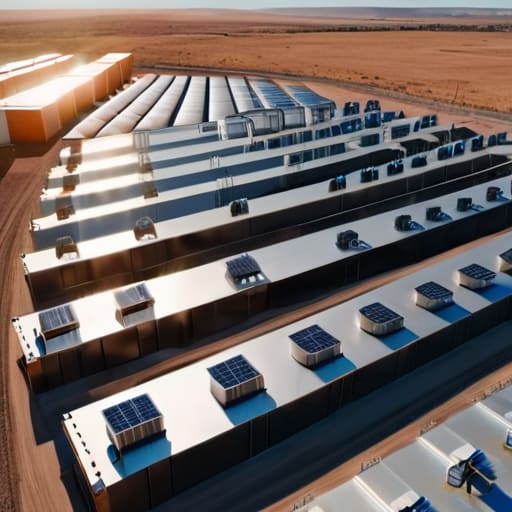
I still remember the smell of scorched electrolyte in my Georgia Tech lab during my junior year—that sharp, metallic tang that tells you a cell is failing long before the sensors do. It was a brutal lesson, but it taught me that you can’t just look at a spec sheet and assume everything is fine. Everyone loves to talk about “the future of energy” in these grand, sweeping terms, but they always gloss over the actual energy storage system components that make or break the whole operation. We spend so much time chasing the dream of a seamless green grid that we forget the hardware is where the real battle is won or lost.
I’m not here to sell you on some vague, corporate vision of a carbon-neutral utopia. I want to pull back the curtain on the actual hardware. In this breakdown, I’m going to walk you through the guts of these systems—from the electrochemical cells to the thermal management units—without the marketing fluff. My goal is to give you a grounded, data-driven look at what actually goes into these systems so you can distinguish between genuine innovation and expensive greenwashing.
Table of Contents
- Beyond the Hype Decoding Electrochemical Storage Technologies
- The Brains Vital Battery Management System Functions
- Hardware Reality Checks: 5 Ways to Spot a Solid Storage Setup
- The Bottom Line: What Actually Matters for the Future of Storage
- ## The Real Cost of Cutting Corners
- The Bottom Line on Hardware
- Frequently Asked Questions
Beyond the Hype Decoding Electrochemical Storage Technologies

Look, everyone loves talking about the “green revolution,” but if we’re being honest, the real battle isn’t being fought in marketing meetings—it’s happening at the molecular level. When we dive into electrochemical storage technologies, we aren’t just talking about making a phone last longer; we’re talking about the fundamental ability to stabilize a fluctuating grid. Whether it’s Lithium-ion or the emerging solid-state players I spent way too many hours researching at Georgia Tech, the chemistry has to be robust enough to handle massive cycles without turning into a paperweight after three years.
It’s not just about the cells, though. You can have the most advanced cathode material in the world, but if your energy storage system architecture is poorly designed, the whole thing is a liability. We need to bridge the gap between raw chemical potential and actual, usable power. This means getting serious about how we manage thermal runaway and charge cycles, because a battery is only as good as the hardware that keeps it from becoming a safety hazard. We need real-world reliability, not just theoretical density.
The Brains Vital Battery Management System Functions

If the cells are the muscles of the system, then the Battery Management System (BMS) is the nervous system. You can have the most expensive lithium-ion cells on the planet, but without a high-tier BMS, you’re basically just sitting on a giant, expensive fire hazard. The primary battery management system functions revolve around one thing: keeping every single cell in line. I’ve seen enough degraded packs in my hobbyist projects to know that if you don’t have precise voltage monitoring and thermal regulation, the whole thing falls apart. The BMS acts as the gatekeeper, constantly calculating state-of-charge and state-of-health to ensure the pack doesn’t push itself into a thermal runaway event.
Beyond just preventing explosions, the BMS is what actually makes large-scale deployment viable. When we talk about complex energy storage system architecture, the BMS is the layer that manages cell balancing—basically making sure one cell isn’t doing all the heavy lifting while its neighbor sits idle. This level of granular control is non-negotiable if we want to move from small consumer electronics to reliable grid-scale storage hardware. If the brains aren’t smart enough to balance the load, the entire investment is wasted.
Hardware Reality Checks: 5 Ways to Spot a Solid Storage Setup
- Don’t just look at the capacity numbers on the spec sheet; look at the thermal management system. If the cooling hardware looks like an afterthought, you’re looking at a system that’s going to throttle its performance or degrade its chemistry the moment things get heavy.
- Vet the BMS (Battery Management System) for its granularity. You don’t want a system that just checks if the pack is “on” or “off”—you need hardware that monitors individual cell voltages and temperatures to prevent the kind of cascading failures that turn a storage unit into a paperweight.
- Demand transparency on the cycle life data. Anyone can promise high energy density, but if they can’t show you how the chemistry holds up after 1,000 or 3,000 cycles, they’re just selling you a short-term fix, not a long-term infrastructure component.
- Check the interconnects and busbar quality. In my lab days, I saw how much energy is lost—and how much heat is generated—just from poor physical connections. High-quality, low-resistance hardware is the difference between an efficient system and a massive heat sink.
- Look past the “green” marketing and scrutinize the component sourcing. A system isn’t actually sustainable if the hardware is built on a supply chain that ignores the lifecycle of the materials. Real efficiency includes how easy those components are to repair or recycle when they finally hit their end-of-life.
The Bottom Line: What Actually Matters for the Future of Storage
Chemistry isn’t just a buzzword; the specific interaction between ions and electrodes determines whether a system is a long-term asset or a massive waste of resources.
A battery is only as good as its brain—without a high-fidelity Battery Management System (BMS) to police voltage and temperature, you’re just sitting on a potential fire hazard.
We have to move past the “green” marketing and start auditing the actual hardware lifecycle, focusing on how these components handle degradation and eventual recycling.
## The Real Cost of Cutting Corners
“You can have the most advanced lithium-ion chemistry in the world, but if your thermal management is trash or your BMS is running on outdated logic, you don’t have a power solution—you just have a very expensive, very volatile fire hazard waiting to happen.”
Desmond Achebe
The Bottom Line on Hardware
At the end of the day, an energy storage system is only as strong as its weakest link. We’ve looked at how the chemistry drives the capacity, how the thermal management keeps things from turning into a meltdown, and how the BMS acts as the digital nervous system keeping everything in check. You can have the most advanced lithium-ion cells on the planet, but if your power electronics are inefficient or your cooling loop is poorly designed, you’re just wasting potential. It’s not just about the big numbers in a marketing brochure; it’s about the interconnected reliability of every single component working in unison to stabilize the grid.
We are standing at the edge of a massive shift in how we move and live, but we can’t get there on vibes alone. The transition to a truly electric future depends on moving past the surface-level hype and actually mastering the hard engineering required to make these systems last. I’m skeptical of companies that promise the moon without showing the math, but I’m incredibly optimistic about what happens when we stop treating batteries like magic boxes and start treating them like the critical infrastructure they are. Let’s build something that actually lasts.
Frequently Asked Questions
If the Battery Management System is the "brain," what happens to the hardware when a single cell starts to deviate from the rest of the pack?
Think of it like a single runner in a relay race suddenly slowing down—they drag the whole team’s pace. When one cell deviates, it becomes a bottleneck. It either drains the healthy cells trying to compensate or, if it’s failing, it can overheat. That’s where the BMS steps in to throttle the pack or isolate that specific module. If we don’t manage that imbalance, you’re looking at rapid degradation or, worst case, thermal runaway.
We talk a lot about lithium-ion, but are we actually seeing any real-world scalability for solid-state components in grid-level storage yet?
Honestly? Not at scale yet. We’re seeing plenty of incredible lab results and pilot programs, but translating that to grid-level deployment is a massive hurdle. Solid-state is the holy grail for density and safety, but the manufacturing cost-per-kWh is still way too high compared to traditional LFP or NMC setups. Right now, it’s still stuck in the “promising prototype” phase. We need to solve the interfacial resistance and production scaling before it actually moves the needle on the grid.
How much of the total system cost is actually driven by the chemistry versus the physical housing and thermal management hardware?
It’s a common misconception that the cells are the only thing that matters, but the math tells a different story. While the active chemistry—the lithium, nickel, cobalt, and whatever else is in the mix—is the biggest driver of raw material costs, it’s not the whole pie. When you factor in the heavy-duty thermal management systems, the structural housing, and the cooling loops, the “non-cell” hardware can eat up a massive chunk of the total system cost. It’s not just about the juice; it’s about the cage that keeps it from melting down.
