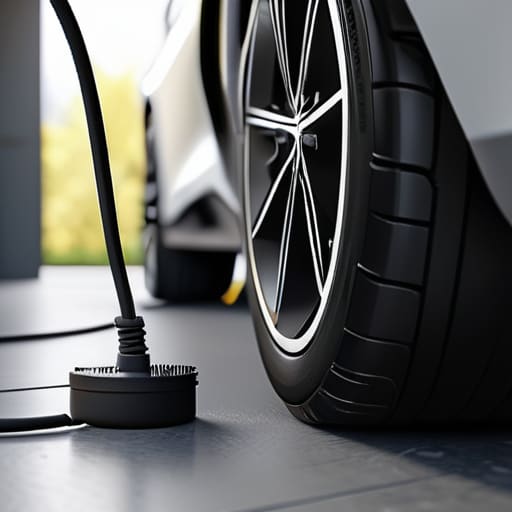
I remember sitting in my dorm at Georgia Tech, surrounded by half-disassembled lithium cells and enough soldering iron smoke to trigger a fire alarm, trying to figure out why my custom skateboard build kept cutting out. It wasn’t a battery chemistry failure or a blown MOSFET; it was a cheap, flimsy connector that had physically frayed from just a few weeks of heavy use. We spend all this time obsessing over megawatt-hours and solid-state breakthroughs, but we completely ignore the most basic physical bottleneck: charging cable durability. If the copper inside the jacket is brittle or the insulation can’t handle a little thermal stress, your high-tech EV is basically just a very expensive paperweight waiting to happen.
I’m not here to sell you on some “premium” brand just because they wrapped their cord in a fancy braided nylon sleeve. I want to look at the actual material science—the gauge of the wire, the quality of the strain relief, and how these components actually hold up under real-world thermal cycling. This isn’t about marketing hype; it’s about the hardware that keeps us moving. I’m going to break down what actually matters so you can stop wasting money on gear that’s built to fail.
Table of Contents
- Braided Nylon vs Tpe Cables Deciphering Material Integrity
- The Physics of Failure Impact of Bend Radius on Longevity
- Hard Truths: How to Actually Protect Your Charging Hardware
- The Bottom Line: Stop Treating Cables Like Afterthoughts
- The Hidden Cost of Cheap Hardware
- The Bottom Line on Hardware Longevity
- Frequently Asked Questions
Braided Nylon vs Tpe Cables Deciphering Material Integrity
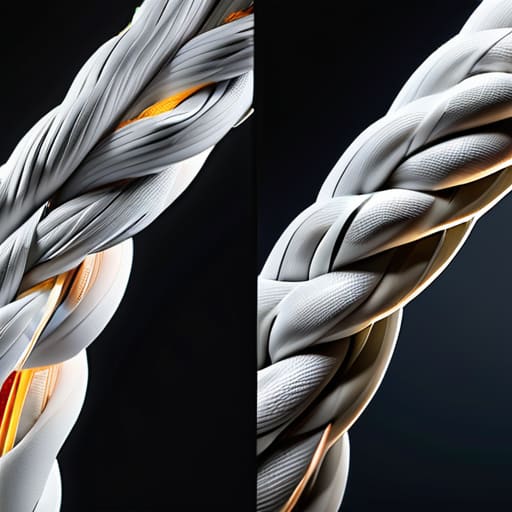
When you’re looking at the spec sheet, you’ll see the debate between braided nylon vs TPE cables thrown around like it’s a simple matter of aesthetics. It’s not. TPE (Thermoplastic Elastomer) is that smooth, rubbery material you see on most standard chargers; it’s flexible and great for a quick reach, but it’s prone to cracking once the polymer starts to degrade from heat and repeated flexing. Braided nylon, on the other hand, acts like a structural exoskeleton. It distributes the tension across a woven mesh, which is a massive win for preventing frayed charging cables when you’re tossing your gear into a backpack or dragging it across a garage floor.
However, the jacket is only half the battle. Even the toughest braid won’t save you if the cable strain relief design is garbage. I’ve seen plenty of “premium” nylon cables that snap right at the neck because the transition from the flexible cord to the rigid connector is too abrupt. If the manufacturer hasn’t accounted for the impact of bend radius on longevity, you’re just buying a more expensive way to experience a short circuit. You need that seamless, reinforced transition to actually handle the mechanical stress of daily use.
The Physics of Failure Impact of Bend Radius on Longevity
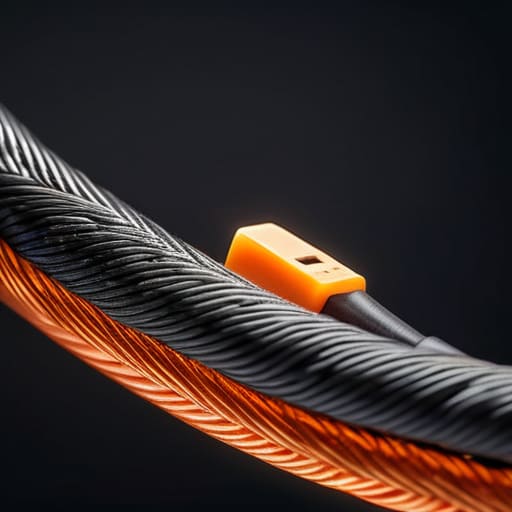
Think of a charging cable like a high-voltage circuit in a substation—it’s not just about the current flowing through it, but how the physical structure handles mechanical stress. When you’re constantly coiling, stuffing, or bending a cable into a tight corner, you’re essentially performing micro-trauma on the internal copper strands. If you ignore the impact of bend radius on longevity, you’re basically inviting a catastrophic failure. Every time you force a sharp angle near the plug, you’re increasing the tension on the internal conductors, which eventually leads to microscopic fractures.
This is where most cheap hardware fails. Without a proper cable strain relief design, that repetitive stress migrates directly toward the junction, leading to USB-C connector fatigue. I’ve seen it a thousand times in the lab: the outer jacket looks fine, but the internal wiring has already surrendered to the physics of tension. If the transition from the flexible cable to the rigid connector isn’t engineered to distribute that force, you aren’t just looking at a slow charge; you’re looking at a total hardware meltdown.
Hard Truths: How to Actually Protect Your Charging Hardware
- Stop treating your cable like a whip; respect the bend radius. If you’re constantly coiling it tight or letting it kink under the weight of the car, you’re micro-fracturing the internal copper strands, and once that resistance climbs, you’re looking at heat issues you don’t want.
- Check your connector pins for carbon buildup or oxidation every few months. It sounds nerdy, but even a tiny layer of grime creates resistance, and resistance is the enemy of efficiency—it turns your charging session into a slow, heat-generating mess.
- Ditch the cheap, unbranded “deals” you find on random marketplaces. I’ve seen too many flimsy, non-certified cables that lack proper shielding; if they aren’t rated for the continuous current draw of an EV, you’re basically playing Russian roulette with your car’s onboard charger.
- Watch your temperature swings. We talk a lot about battery chemistry, but the cable is the lifeline; extreme heat from direct sun or freezing temperatures can make the outer jacket brittle or too soft, compromising the structural integrity of the insulation.
- Manage your tension. When you’re plugging in, don’t let the weight of the heavy cable pull directly on the port or the connector head. That constant downward torque is a slow-motion death sentence for the internal solder joints.
The Bottom Line: Stop Treating Cables Like Afterthoughts
Material science matters more than aesthetics; if you’re choosing between a cheap PVC jacket and high-grade TPE or braided nylon, pick the latter to avoid the inevitable micro-fractures that kill conductivity.
Respect the bend radius or pay the price in heat—forcing tight loops in your cable storage creates internal stress points that lead to catastrophic failure long before the battery itself dies.
Durability is a sustainability metric; investing in high-integrity hardware isn’t just about saving money, it’s about reducing the massive e-waste stream generated by disposable, low-quality charging components.
The Hidden Cost of Cheap Hardware
“We spend all this time debating cell chemistry and energy density, but we’re ignoring the literal lifeline of the system; if your charging cable is built like a disposable toy, it doesn’t matter how advanced your battery is—you’ve already failed the sustainability test.”
Desmond Achebe
The Bottom Line on Hardware Longevity
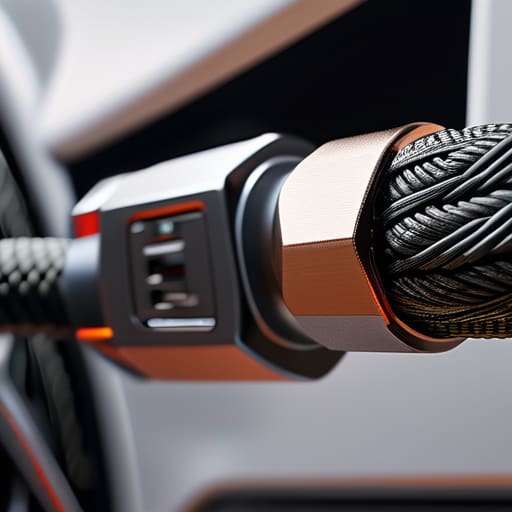
At the end of the day, choosing a charging cable isn’t just about finding something that fits the port; it’s about understanding the material science that keeps your car running. We’ve looked at how braided nylon offers that much-needed abrasion resistance compared to the more flexible but delicate TPE, and we’ve seen how ignoring the bend radius can lead to internal copper fatigue that you won’t even see until it’s too late. If you’re going to invest in an EV, don’t let a substandard, flimsy cable be the weak link that turns your high-tech vehicle into a driveway ornament.
We talk a lot about the “grand transition” to electric mobility, but that transition is built on a foundation of millions of small, physical connections. If we want a truly sustainable ecosystem, we have to stop treating our charging hardware like disposable plastic junk and start demanding industrial-grade reliability. The tech is getting better every day, and as we move toward a more electrified grid, I truly believe that building for durability is the only way to ensure this revolution actually sticks. Let’s build a future that’s meant to last.
Frequently Asked Questions
How much does extreme temperature fluctuation—like a freezing winter night versus a heatwave—actually affect the internal copper conductivity and jacket flexibility?
Think of it like this: extreme heat is a silent killer for the jacket, making it prone to micro-cracking and eventual chemical breakdown. But the real headache is the thermal cycling. When you swing from a freezing night to a heatwave, the different expansion rates between the copper core and the insulation create internal mechanical stress. This can actually degrade the conductivity over time as the physical connection between materials shifts, making your charging efficiency tank.
Is there a real-world difference in degradation between high-voltage DC fast charging and standard AC home charging when it comes to connector pin wear?
Look, there’s a massive difference. When you’re hitting a DC fast charger, you’re dealing with much higher current densities flowing through those pins. It’s not just about physical friction; it’s about thermal stress. High-voltage DC charging generates significantly more heat at the contact point, which can accelerate oxidation and even cause micro-pitting on the metal surfaces. AC home charging is a much “gentler” electrical environment, so your connector pins will almost always outlast the thermal fatigue seen at high-speed stations.
At what point does the cost of upgrading to a premium, reinforced cable actually offset the price of just replacing a cheap one every year?
Look, I get the temptation to just grab the cheapest option on Amazon every twelve months, but the math doesn’t actually track. If you’re replacing a $30 cable annually, you’re burning $150 over five years—and that’s not even accounting for the e-waste headache. A $90 reinforced cable that lasts the full five years isn’t just more reliable; it’s literally cheaper and keeps more junk out of the landfill. Buy once, buy right.
