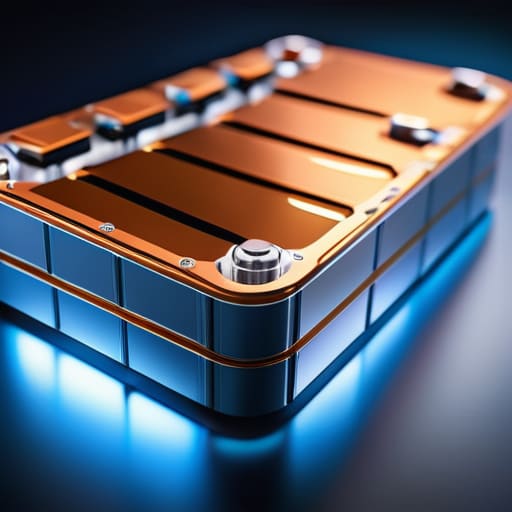
I remember sitting in a Georgia Tech lab at 2:00 AM, staring at a lithium-ion cell that had just failed a cycle test, feeling that same frustration I see in every headline today. Everyone loves to throw around these glossy projections about how ev battery cost trends are plummeting, acting like the math is just a straight line pointing toward affordability. But as someone who has spent way too much time looking at degradation curves and raw material volatility, I know that “cheaper” doesn’t always mean “better” or even “sustainable.” We keep getting sold this narrative that the price drop is inevitable, but they rarely talk about the trade-offs in chemistry that happen when you start cutting corners to save a buck.
I’m not here to regurgitate a press release from some car manufacturer’s PR department. My goal is to strip away the greenwashing and look at the actual hardware. I’m going to break down what’s really driving these ev battery cost trends—from the shift in cathode compositions to the real-world impact of manufacturing scale—so you can understand the actual trajectory of the industry. No fluff, no corporate hype, just the data and the chemistry that will determine if electric mobility actually scales for my generation.
Table of Contents
Lithium Ion Battery Price Reduction vs Real Sustainability

Here’s the thing: we’ve become obsessed with the downward slope of the lithium-ion battery price reduction curve, and for good reason. On paper, it looks like a massive win. As we hit higher levels of gigafactory production economies of scale, the unit cost per kilowatt-hour keeps dropping. But if I’ve learned anything from my time in the lab, it’s that a cheaper battery isn’t necessarily a better one. We’re seeing massive gains in battery cell manufacturing efficiency, but that efficiency is often being bought at the expense of long-term material stability.
If we just chase the lowest possible price point, we risk creating a massive headache for the next decade. When we squeeze the margins too tight, we end up with chemistries that are incredibly sensitive to thermal runaway or suffer from rapid capacity fade. We can’t let the drive for a lower electric vehicle total cost of ownership blind us to the raw material supply chain impact. If our “affordable” batteries rely on minerals sourced through unethical or ecologically devastating methods, we aren’t actually building a sustainable future—we’re just trading one fossil fuel dependency for another.
Gigafactory Production Economies of Scale Fact or Fiction
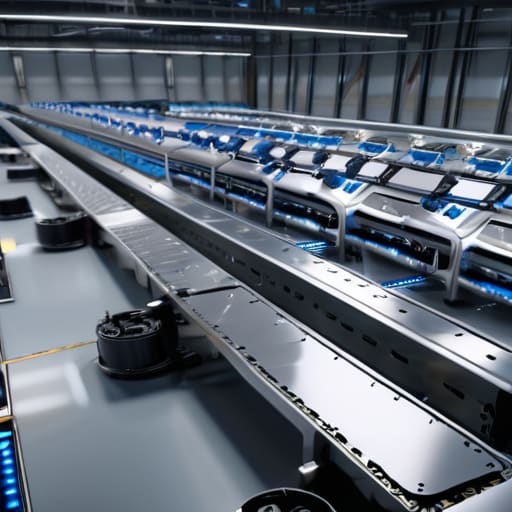
We’ve all heard the gospel of the Gigafactory: build it bigger, build it faster, and the unit cost will plummet. On paper, it’s a mathematical certainty. As we ramp up battery cell manufacturing efficiency, the fixed costs of the facility get spread across millions of units rather than thousands. It’s like the difference between baking one loaf of bread in a home oven versus running a commercial bakery; the overhead per loaf drops significantly once you hit that critical mass.
But here’s where my skepticism kicks in. Scaling up the assembly line is only half the battle if we can’t feed the beast. You can build the most advanced facility on the planet, but if you hit a bottleneck in the raw material supply chain impact, those massive production lines sit idle and expensive. We often treat these factories as magic boxes that solve everything, but they are actually incredibly sensitive to the volatility of lithium and nickel markets. If the supply doesn’t keep pace with the scale, the promised economies of scale might just end up being a massive, expensive lesson in logistics.
Real Talk: What Actually Drives the Price Tag Down?
- Stop watching the sticker price and start watching the cathode. If we don’t find a way to stabilize the cost of nickel and cobalt, those “record-low” battery prices are going to be incredibly fragile.
- Scale is great, but efficiency is better. Building a massive Gigafactory is useless if your manufacturing yield is trash; we need to focus on perfecting the chemistry at a smaller scale before we just throw more concrete at the problem.
- Keep an eye on LFP (Lithium Iron Phosphate). It’s not the high-performance king, but if we want to make EVs actually affordable for the average person, we need to embrace this cheaper, more durable chemistry for entry-level models.
- Don’t ignore the recycling loop. True cost reduction isn’t just about mining more stuff; it’s about creating a circular economy where we recover the high-value materials from old packs instead of paying the massive premium to dig them out of the ground again.
- Watch the solid-state hype with a healthy dose of skepticism. It’s the holy grail for energy density, but until the manufacturing process moves from “lab experiment” to “automated assembly line,” it’s not going to do anything for your monthly car payment.
The Bottom Line: Moving Past the Hype
Lowering the price per kWh is a hollow victory if we aren’t simultaneously solving the supply chain mess; we can’t build a green future on a foundation of unsustainable mineral extraction.
Scaling up production through Gigafactories is essential, but massive capacity doesn’t matter if the underlying chemistry remains too expensive or too resource-heavy to deploy globally.
The real winners in the EV race won’t just be the companies with the lowest sticker prices, but the ones actually innovating in solid-state and high-density storage to decouple growth from environmental degradation.
The Real Price of Cheap Cells
“We keep celebrating the plummeting cost per kilowatt-hour like it’s a pure win, but as someone who’s spent way too many late nights in a lab looking at cell degradation, I’m telling you: a cheap battery is a failure if the chemistry is so unstable that it’s basically disposable. We don’t just need cheaper energy storage; we need chemistry that actually lasts long enough to make the math work for the planet, not just the quarterly earnings report.”
Desmond Achebe
The Bottom Line on the Battery Race

Look, we can’t let the shiny downward curves on a cost-per-kWh graph distract us from the actual engineering reality. We’ve seen that while Gigafactories are cranking out volume and driving down the price of standard lithium-ion cells, we are still hitting massive walls when it comes to the long-term sustainability of the supply chain. Scaling production is great, but if we’re just trading one resource bottleneck for another, we haven’t actually solved the problem; we’ve just optimized the deficit. To truly move the needle, the industry has to stop chasing cheap manufacturing at any cost and start prioritizing circular chemistry and stable material sourcing that doesn’t rely on volatile geopolitical luck.
I’m not a pessimist, but I am a realist. I want to see a world where electric mobility isn’t a luxury for the early adopters or a logistical nightmare for the grid, but a seamless, standard part of our infrastructure. The transition is happening, whether the corporate PR departments want to admit the hurdles or not. If we can bridge the gap between raw chemical innovation and scalable, ethical production, we won’t just be changing how we drive—we’ll be fundamentally rewriting how humanity interacts with energy. Let’s stop settling for “good enough” and start building the hardware that actually deserves the future we’re promised.
Frequently Asked Questions
If we keep pushing for cheaper LFP batteries to drop prices, are we just trading one supply chain headache for another?
That’s the million-dollar question. LFP is great because it ditches expensive nickel and cobalt, which is a huge win for cost and ethics. But we aren’t out of the woods. By pivoting to LFP, we’re essentially doubling down on lithium and phosphate. If we don’t stabilize the supply chains for those specific minerals, we’re just swapping a cobalt crisis for a lithium bottleneck. We’re trading one dependency for another, and that’s a risky game.
At what point does the cost of scaling up manufacturing actually hit a ceiling because of raw material scarcity?
We hit that ceiling the second our demand curve outpaces the geological reality of mining. You can build a thousand Gigafactories, but you can’t “scale” more lithium or nickel into existence overnight. If we don’t pivot toward chemistries like LFP or sodium-ion—which swap scarce minerals for more abundant ones—we’re just building a massive, expensive bottleneck. Scaling production is useless if the raw material supply chain is stuck in a permanent deficit.
Are we actually seeing a real drop in cell-level costs, or is the "cheaper EV" narrative just masking the rising costs of the actual minerals?
Look, the math is getting messy. On paper, cell-level costs look like they’re trending down because of better manufacturing efficiency, but that’s only half the story. If you peel back the sticker price, you’ll see that mineral volatility—specifically lithium and nickel—is constantly trying to claw those gains back. We’re basically in a tug-of-war between smarter factory automation and the brutal reality of raw material scarcity. It’s not a straight line down; it’s a volatile climb.
