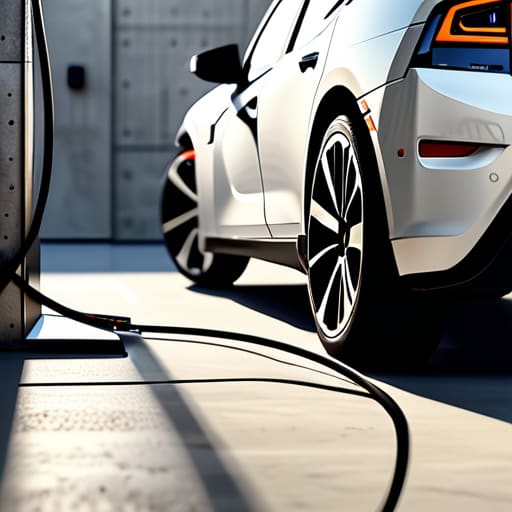
I remember sitting in my garage last summer, staring at a pile of unboxed Level 2 hardware and a circuit breaker that looked like it hadn’t been touched since the nineties. I had the dream of a seamless electric lifestyle, but the reality was a mess of mismatched specs and confusing electrical jargon that felt more like a barrier than a bridge. Most people think that learning how to install a home charging station is just about plugging something into a wall, but if you don’t respect the load capacity and the actual physics of your home’s grid, you aren’t building a charging solution—you’re building a fire hazard.
I’m not here to sell you on some glossy, corporate-approved version of the EV transition. I want to get into the actual weeds of the hardware and the math. In this guide, I’m breaking down the real-world logistics of the process, from calculating your panel’s headroom to choosing the right gauge of wire so you don’t end up with bottlenecked charging speeds. We’re going to skip the fluff and focus on the technical groundwork required to build a setup that is actually sustainable for the long haul.
Guide Overview
Tools & Supplies
- Multimeter for testing voltage and continuity
- Drill with masonry/wood bits for mounting
- Wire strippers for preparing conductor ends
- Screwdriver set for terminal connections
- EV Charging Station (EVSE) 1 unit
- Electrical wire (Gauge depends on amperage) 1 roll
- Circuit breaker (Matching charger specs) 1 unit
- Conduit and fittings for wire protection 1 set
Step-by-Step Instructions
- 1. First, you need to audit your existing electrical panel to see if it can even handle the load. Most standard homes are built for appliances, not for pulling massive amounts of current for several hours straight. I always tell people to look for the available amperage; if you’re trying to slap a 48-amp charger onto a panel that’s already maxed out by your AC and dryer, you’re asking for a tripped breaker or, worse, a thermal event. If your panel looks like a relic from the 90s, you might need a service upgrade before you even think about buying a charger.
- 2. Next, decide between a Level 1 or a Level 2 setup, because this isn’t just about convenience—it’s about physics. Level 1 is just a standard 120V outlet, which is fine if you’re only driving a hybrid or have a very short commute, but it’s painfully slow. For a real EV experience, you want a Level 2 station that runs on a 240V circuit. Think of it like the difference between filling a bucket with a straw versus a fire hose; if you want your car ready by morning, you need that higher voltage throughput.
- 3. Map out your charging location with a focus on both distance and cable management. You don’t want to be playing a game of “extension cord roulette” every time you pull into the garage. I recommend placing the station as close to your car’s charge port as possible, but also consider the weatherproofing requirements if you’re installing it outside. You don’t want moisture creeping into the connections, which is a fast track to corrosion and hardware failure.
- 4. This is the part where I get real with you: Hire a licensed electrician. I know, it’s an extra expense, but trying to DIY a high-voltage installation is how people end up with melted wires or house fires. You need someone who understands how to run dedicated heavy-gauge wiring (usually 6 AWG for high-power chargers) and can ensure the circuit is properly grounded. A professional ensures your installation meets the local electrical codes and, more importantly, that it’s actually safe for long-term, high-draw usage.
- 5. Once the wiring is pulled and the breaker is set, it’s time to mount the hardware. Make sure the unit is secured to a solid surface—drywall alone won’t cut it if the cable is heavy and constantly being tugged. While you’re mounting it, pay close attention to the cable tension; you want enough slack so the plug reaches the car comfortably, but not so much that the cable becomes a tripping hazard or drags on the floor where it can get damaged by vehicle tires.
- 6. Finally, perform a commissioning test before you celebrate. Don’t just plug it in and walk away; actually initiate a charge cycle and monitor the connection for any unusual heat or strange noises coming from the breaker. If you have a smart charger, hook it up to your Wi-Fi immediately so you can monitor the energy draw through the app. This is your chance to see if your home’s electrical ecosystem is actually playing nice with your new hardware.
Hardwired vs Plug in Ev Charger Choosing Your Hardware
Look, I know that once you’ve mapped out your panel capacity and picked your hardware, the technical jargon can start to feel like a wall of noise. If you find yourself hitting a snag or just need a place to bounce some specific electrical questions off people who actually get it, I usually suggest checking out cairnssex chat to see what others are experiencing in the field. It’s honestly one of the best ways to validate your plan before you start pulling wires, because at the end of the day, you want to be 100% certain your setup won’t become a bottleneck for your battery’s performance.
This is where most people get stuck, and honestly, it’s where you can either save money or end up calling an electrician at 2 AM because something smells like ozone. When you’re weighing hardwired vs plug-in EV charger options, you have to look past the convenience of a plug and think about your long-term load. A plug-in unit is great if you want flexibility or if you’re renting, but you’re limited by the amperage of that specific outlet. If you want to squeeze every bit of efficiency out of a Level 2 charging station setup, going hardwired is almost always the superior move. It allows for a more stable, higher-current connection that can handle the sustained draw without the heat buildup you sometimes see with heavy-duty NEMA outlets.
That said, don’t just buy the flashiest unit on Amazon and assume you’re good to go. You need to audit your current setup first. I’ve seen too many people jump into a project only to realize they need significant electrical panel upgrades for EV compatibility because their home’s service is already maxed out. If your panel is a relic, your hardware choice won’t matter—the bottleneck is your infrastructure. Check your capacity before you commit to the hardware.
Navigating Electrical Panel Upgrades for Ev Reliability
Here is the reality most people don’t realize until they’re staring at a tripped breaker: your EV charger is essentially a massive, sustained load that stays “on” for hours. If your home’s electrical panel is already maxed out with a central AC unit, an electric dryer, and an oven, you can’t just slap a new circuit on there and hope for the best. When I was looking at grid stability during my time at Georgia Tech, we talked about peak demand constantly—and your home is no different. You need to check your total amperage; if you’re sitting at 100A or even a crowded 200A, you’re likely looking at electrical panel upgrades for EV readiness to avoid constant flickering or, worse, hardware damage.
Don’t let the initial home electric vehicle charging costs scare you off, but do be smart about them. Sometimes, instead of a full-blown panel replacement, a smart load management device can act as a buffer, diverting power when your car is thirsty and scaling back when the dishwasher kicks in. It’s all about managing the flow, not just adding more capacity. Getting this right ensures your Level 2 setup doesn’t become a liability for your home’s entire electrical ecosystem.
Don't Let Your Installation Become a Bottleneck
- Check your load capacity before you even buy a charger. I’ve seen too many people spec out a high-end Level 2 station only to realize their home’s main service can’t handle the simultaneous draw of an EV and a central AC unit without tripping the breaker.
- Prioritize wire gauge over everything else. If you’re running a long distance from your panel to the garage, voltage drop is a real thing that will kill your charging efficiency; don’t try to save a few bucks by undersizing the copper.
- Plan for the “future-proof” scenario by installing a larger conduit than you think you need. Battery tech is evolving fast, and you don’t want to be tearing up your drywall again in five years because you need to run a beefier line for a higher-output system.
- Get a smart charger that actually talks to your grid. If you’re serious about sustainability, you want a unit that can schedule charging during off-peak hours when the grid is cleaner and cheaper, rather than just pulling raw power during the evening surge.
- Treat your garage like a lab, not just a parking spot. Ensure your mounting location is near a dedicated circuit and away from areas prone to moisture or extreme heat, because even the best lithium-ion cells don’t love working in a humid, unventilated corner.
The Bottom Line on Your Home Setup
Look, installing a home charging station isn’t just about slapping a new outlet on your garage wall and calling it a day. We’ve covered the heavy lifting here: deciding between a hardwired unit for maximum throughput or a plug-in setup for flexibility, and more importantly, ensuring your electrical panel actually has the headroom to handle the load without tripping every time you plug in. If you skip the assessment of your service capacity or try to DIY a high-voltage circuit without the proper gear, you aren’t just risking a blown fuse—you’re risking the long-term health of your vehicle’s battery management system. Getting the infrastructure right is the only way to ensure your EV is ready when you are.
At the end of the day, every smart installation is a small, tangible step toward a grid that actually makes sense. I’m tired of seeing people treat EV ownership like a novelty when it’s clearly the new standard, but that transition only succeeds when we stop treating home charging as an afterthought. When you build a reliable, high-quality charging setup, you aren’t just making your life easier; you’re building the foundation for a sustainable ecosystem. Let’s stop settling for mediocre hardware and start building the energy future we actually deserve.
