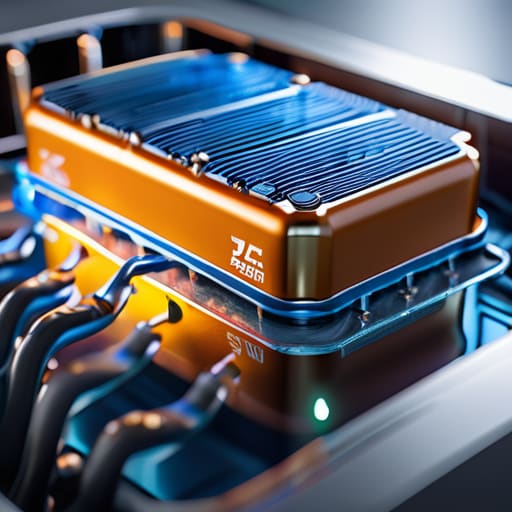
I remember sitting in a humid lab at Georgia Tech, staring at a lithium-ion cell that had just undergone a thermal runaway because the cooling loop couldn’t keep up with a rapid discharge cycle. It wasn’t just a failed experiment; it was a stark reminder that all the fancy software in the world won’t save you if your hardware is fundamentally under-engineered. Everyone loves to talk about range and 0-60 times, but they completely gloss over the fact that ev battery cooling is the actual gatekeeper of longevity. If we don’t master the thermal management, we’re just building expensive, short-lived paperweights that will end up in a landfill way sooner than any manufacturer’s brochure claims.
I’m not here to sell you on some corporate greenwashing or vague promises about “future-proof” tech. Instead, I want to pull back the curtain on the actual chemistry and mechanics that dictate how these systems perform under pressure. We’re going to strip away the marketing fluff and look at the real-world trade-offs between liquid, air, and immersion cooling. My goal is to give you a pragmatic, data-driven look at the hardware that will actually power our future without the hype.
Table of Contents
- Air Cooling vs Liquid Cooling for Evs Cutting Through the Noise
- Battery Pack Temperature Regulation the Hardware Reality Check
- Pro-Tips for Decoding Battery Thermal Performance
- The Bottom Line on Thermal Management
- The Real Cost of Thermal Neglect
- The Bottom Line on Thermal Management
- Frequently Asked Questions
Air Cooling vs Liquid Cooling for Evs Cutting Through the Noise

Look, if you’re browsing EV forums, you’ll see people arguing about air versus liquid cooling like it’s a holy war. Here’s the reality: air cooling is cheap, simple, and lightweight, which is why you still see it in some budget-tier commuters or older hybrid setups. It’s basically just blowing air over the cells to keep things stable. But let’s be real—air is a terrible heat conductor. Once you start pushing high-performance discharge rates or you’re sitting in a 100-degree standstill in Phoenix, air cooling just can’t keep up.
This is where ev battery thermal management systems actually earn their keep. Liquid cooling uses a glycol-based coolant circulating through plates or ribbons between the cells, which is way more efficient at pulling heat away from the core. It’s the difference between trying to cool a laptop with a desk fan versus a high-end liquid loop. If we want to achieve true electric vehicle thermal efficiency and prevent cells from degrading prematurely, liquid cooling isn’t just a luxury; it’s the baseline. Without that active thermal control, we’re just asking for a much shorter battery lifespan.
Battery Pack Temperature Regulation the Hardware Reality Check
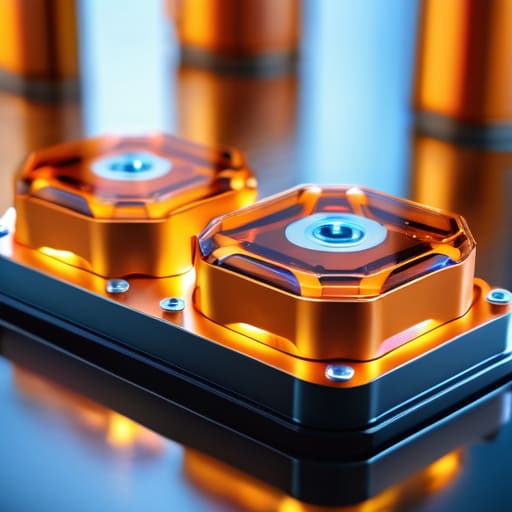
Let’s get real about the hardware: you can have the most advanced cell chemistry in the world, but if your battery pack temperature regulation is sloppy, you’re basically driving a ticking time bomb. In the lab, we see it all the time—even a few degrees of deviation can accelerate degradation or, in the worst-case scenario, trigger lithium-ion battery thermal runaway prevention protocols that leave you stranded. It’s not just about keeping things cool; it’s about maintaining a tight thermal window so the ions can actually move where they’re supposed to.
When we look at the actual architecture, the complexity is wild. We aren’t just talking about a simple fan or a radiator; we’re talking about integrated ev battery thermal management systems that have to balance heating the pack in a Georgia winter with shedding massive heat loads during a DC fast charge. Some engineers are even pushing phase change materials for battery cooling to soak up those sudden spikes in temperature. It’s a brutal balancing act between weight, cost, and raw thermal efficiency, and frankly, the hardware is the only thing that determines if these vehicles actually last a decade or just a few years.
Pro-Tips for Decoding Battery Thermal Performance
- Stop falling for “thermal stability” buzzwords; look for the actual coolant flow rate and how the system handles rapid DC fast charging, because that’s when the real heat spike happens.
- Watch the cell-to-cell temperature delta. If one part of the pack is running significantly hotter than the rest, you’re looking at uneven degradation that will kill your range faster than a bad winter.
- Don’t ignore the weight penalty. Liquid cooling is superior for performance, but as an engineer, I’m always weighing those extra pumps and hoses against the energy density loss from the added mass.
- Pay attention to the pre-conditioning features in the software. If the car can’t intelligently ramp up the thermal management before you hit a high-speed charger, the hardware is basically just spinning its wheels.
- Keep an eye on the chemistry-specific requirements. A LFP (Lithium Iron Phosphate) pack behaves very differently under thermal stress than an NMC pack, so one size definitely does not fit all when it comes to cooling logic.
The Bottom Line on Thermal Management

Liquid cooling isn’t just a luxury for high-performance cars; it’s the baseline requirement if we want to prevent rapid lithium-ion degradation and actually make long-term battery ownership viable.
We need to stop treating thermal management as an afterthought in pack design—if the hardware can’t handle the heat during fast charging, the entire sustainability argument falls apart.
The real winner in the EV transition won’t just be the company with the biggest battery, but the one that masters the chemistry-to-cooling ratio to keep cells stable and efficient for years, not just months.
The Real Cost of Thermal Neglect
“Everyone wants to talk about range anxiety and charging speeds, but if we aren’t obsessing over the thermal management hardware, we’re just building glorified heaters. You can have the most advanced chemistry in the world, but if your cooling system can’t keep those cells in the sweet spot, you’re just fast-tracking degradation and turning a sustainable solution into a massive waste problem.”
Desmond Achebe
The Bottom Line on Thermal Management
At the end of the day, we have to stop treating battery cooling like a secondary feature or some minor engineering footnote. Whether we’re talking about the simplicity of air cooling or the heavy-duty thermal regulation of liquid-cooled systems, the math remains the same: temperature is the ultimate arbiter of battery life. If we can’t manage the heat generated during rapid charging or high-speed discharge, we’re basically just accelerating the chemical degradation of the cells. We can have the most advanced lithium-ion chemistry in the world, but without robust thermal hardware, that chemistry is just a ticking clock on your vehicle’s lifespan.
I’m optimistic about where we’re headed, but I’m staying skeptical of any company that promises “infinite range” without explaining how they’re handling the heat. The real victory in the EV transition won’t just come from bigger batteries or faster charging speeds; it will come from the engineering precision required to keep those cells stable for a decade, not just a few years. We need to build hardware that is as resilient as the people who are going to rely on it. Let’s stop chasing the hype and start focusing on the actual stability of the grid and the vehicles that power it.
Frequently Asked Questions
If liquid cooling is clearly superior for high-performance packs, why are we still seeing air-cooled systems in budget EVs instead of just moving past them?
Look, it’s a classic engineering trade-off: performance vs. bill of materials. Liquid cooling is amazing for thermal stability, but it’s heavy and complex. You’ve got pumps, coolant loops, and extra weight that eats into your range. For a budget EV meant for city commuting, manufacturers are prioritizing cost and simplicity. They’re betting that for a low-speed commuter, the thermal overhead of air cooling is a “good enough” compromise to keep the sticker price down.
How much of an actual impact does active thermal management have on the long-term degradation of lithium-ion cells compared to just passive insulation?
Look, if you’re relying on passive insulation, you’re basically just putting a blanket on a feverish patient. Insulation might keep the heat in, but it does nothing to actually move it. Without active thermal management, those cells are going to cycle through extreme temperature swings every time you floor it or hit a fast charger. That thermal stress is what kills your capacity. Active cooling is the difference between a battery that lasts ten years and one that’s junk in three.
Does the added weight and complexity of a liquid cooling loop actually negate the efficiency gains you get from keeping the battery in its sweet spot?
It’s a fair question, and honestly, it’s the kind of trade-off that keeps me up at night. Yes, you’re adding pumps, hoses, and coolant weight, which is a penalty. But it’s a math problem: the energy lost to friction from that extra mass is nothing compared to the massive efficiency bleed you get when cells drift out of their thermal sweet spot. If the chemistry isn’t regulated, you aren’t just losing range—you’re killing the battery’s lifespan.
