
I remember sitting in my junior year lab at Georgia Tech, staring at a lithium-ion cell that had been absolutely trashed because someone thought “fast charging” was a substitute for actual thermal management. It’s the same frustration I see every day: people buy these incredible pieces of engineering and then immediately start sabotaging them with terrible electric car driving habits. We’ve been sold this dream that EVs are “set it and forget it” appliances, but that’s total corporate greenwashing. If you treat your battery like a bottomless pit of energy without respecting the underlying chemistry, you aren’t just losing range—you’re actively killing the lifespan of your most expensive asset.
I’m not here to give you some vague, polished manual written by a marketing team. I want to talk about the actual hardware and how your behavior on the road dictates the degradation of your cells. I’m going to break down the real-world physics of how you drive, from regenerative braking efficiency to temperature management, so you can stop guessing and start optimizing. This is about moving past the hype and mastering the science of efficiency to make sure your tech actually lasts.
Table of Contents
- Mastering Smooth Acceleration for Evs to Protect Cell Integrity
- Optimizing Kwh Per Mile Through Precision Energy Management
- The Real-World Playbook: 5 Ways to Stop Killing Your Battery
- The Bottom Line: Thinking Like a Grid Analyst
- ## The Reality of Lithium-Ion Longevity
- The Bottom Line on Battery Longevity
- Frequently Asked Questions
Mastering Smooth Acceleration for Evs to Protect Cell Integrity
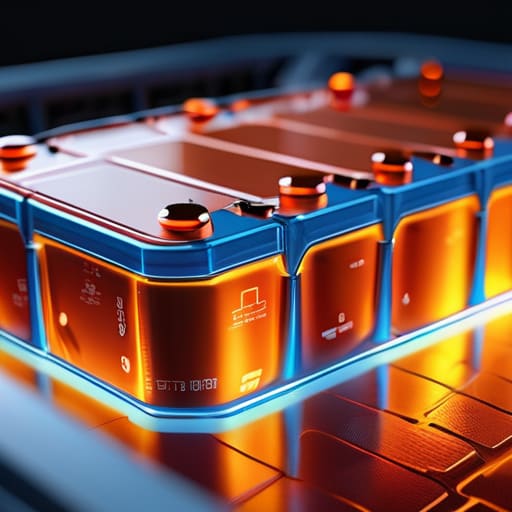
Look, I get it. When you’re sitting in a dual-motor EV with instant torque, the temptation to floor it just to feel that neck-snapping rush is massive. But from a grid analyst’s perspective, every time you stomp the pedal, you’re essentially asking your battery to perform a high-stress chemical sprint. This sudden surge in current causes internal resistance to spike, which leads to localized heating within the cells. If you’re constantly chasing that zero-to-sixty high, you’re essentially sabotaging your electric vehicle thermal management and accelerating the degradation of your lithium-ion chemistry.
Think of your battery like a marathon runner rather than a sprinter. If you want to master smooth acceleration for EVs, you need to treat the pedal like it’s made of glass. Instead of aggressive bursts, aim for a linear, progressive increase in power. This steady discharge helps maintain a more stable temperature profile across the pack, which is the secret to long-term health. By smoothing out those power spikes, you aren’t just preserving the hardware; you’re actually optimizing kWh per mile and making sure your range doesn’t vanish the moment you hit a highway on-ramp.
Optimizing Kwh Per Mile Through Precision Energy Management

If you want to stop obsessing over your percentage meter and start understanding your actual efficiency, you have to look at optimizing kWh per mile. Think of your battery like a reservoir; every time you floor it or slam the brakes, you’re essentially creating turbulence that wastes energy. Most people think driving an EV is just “set it and forget it,” but if you aren’t actively managing how you pull current from the cells, you’re leaving range on the table.
The real secret isn’t just about being gentle; it’s about mastering regenerative braking optimization. Instead of relying on friction brakes to scrub off speed, you should be using the motor as a generator to pump that kinetic energy back into the chemistry. It’s like catching rain in a bucket instead of letting it splash onto the pavement. When you time your deceleration to maximize that recovery, you aren’t just driving—you’re actively managing the energy lifecycle of your trip. It turns the drive from a simple depletion task into a game of high-stakes energy management.
The Real-World Playbook: 5 Ways to Stop Killing Your Battery
- Stop treating regenerative braking like an afterthought. If you’re just slamming the pedal and then coasting, you’re creating massive, inefficient current spikes. Use the regen paddles or settings to modulate your deceleration; it’s much easier on the cell chemistry to trickle that energy back into the pack than to force a massive, heat-generating surge.
- Watch your thermal overhead during high-speed runs. I’ve seen way too many people think that because an EV is “electric,” it doesn’t care about heat. It does. If you’re pushing 80mph on a summer highway, your battery management system is working overtime to keep those cells from cooking. If you want longevity, moderate your top-end speeds to keep the internal resistance from spiking.
- Quit the “Charge to 100%” obsession. I know, the range anxiety is real, but keeping your lithium-ion cells at a high state of charge (SoC) for extended periods is basically a slow-motion death sentence for your capacity. If you’re just commuting, aim for the 20-80% sweet spot. Think of it like a rubber band—if you keep it stretched to its limit constantly, it’s going to lose its snap.
- Be smarter about your pre-conditioning habits. Don’t just jump in a freezing car and floor it. If your EV has a pre-conditioning feature, use it while the car is still plugged in. This uses grid power to bring the battery to its optimal operating temperature rather than forcing the battery to use its own stored energy to fight off thermal inertia.
- Respect the “Depth of Discharge” limit. Letting your car sit at 5% until it hits zero isn’t just a way to get stranded; it’s a way to trigger permanent chemical degradation. Deep discharges put immense stress on the anode and cathode structure. Treat your battery like a high-performance tool, not a disposable tank, and always give yourself a buffer.
The Bottom Line: Thinking Like a Grid Analyst
Stop treating your battery like a bottomless tank; treat it like a chemical system that responds to how you push it.
Smoothness isn’t just about comfort—it’s about minimizing the thermal stress that causes long-term lithium-ion degradation.
Real efficiency happens at the intersection of smart driving and understanding your hardware’s specific energy limits.
## The Reality of Lithium-Ion Longevity
“Stop thinking about your battery as a gas tank that you just fill up; start thinking about it as a living chemical system. Every time you floor it unnecessarily or let the state of charge bottom out, you aren’t just losing range—you’re physically degrading the cell chemistry that’s supposed to power your next decade of driving.”
Desmond Achebe
The Bottom Line on Battery Longevity
At the end of the day, managing an EV isn’t about being a cautious, boring driver; it’s about understanding that you’re operating a mobile chemical reactor. We’ve covered how smoothing out your acceleration protects the structural integrity of your cells and how obsessing over your kWh per mile keeps your discharge cycles from becoming unnecessarily aggressive. If you treat your battery like a delicate piece of high-performance hardware rather than an infinite gas tank, you’re going to see a massive difference in long-term capacity retention. It’s the difference between a pack that’s still thriving after a decade and one that’s prematurely degraded because of thermal stress and sloppy energy management.
We talk a lot about the “green revolution,” but the truth is that the transition to electric mobility only succeeds if we build a foundation of sustainable hardware. Every time you optimize your driving habits, you’re essentially extending the lifecycle of the materials required to build that battery—reducing the need for more lithium, more cobalt, and more intensive mining. I’m optimistic about where we’re headed, but I’m skeptical of anyone who says the tech is perfect right out of the box. We have to be smarter than the machines we drive. Let’s stop just consuming energy and start mastering the chemistry that powers our future.
Frequently Asked Questions
Does frequent use of regenerative braking actually accelerate cell degradation, or is it safer for the battery than friction braking?
Look, I get why people worry—it feels like you’re constantly slamming the battery with current. But honestly? Regenerative braking is actually your friend. It’s much gentler on the chemistry than the heat spikes you get from aggressive friction braking. Think of it like a controlled recharge rather than a sudden jolt. As long as you aren’t riding the regen like a maniac in extreme cold, it’s way safer for your cell longevity.
How much does extreme temperature fluctuation—like leaving the car in a freezing garage—actually impact my daily Wh/mi efficiency?
Look, leaving your car in a freezing garage isn’t just a comfort issue; it’s a chemistry nightmare. When those cells hit sub-zero temps, internal resistance spikes like crazy. Your battery has to work twice as hard just to move ions around, which tanks your Wh/mi efficiency instantly. You’re basically burning extra energy just to fight the cold before you even hit the pedal. If you want to save your range, manage your thermal state.
Is it better for long-term chemistry to keep my state of charge between 20% and 80%, or is that just a myth meant to limit my range?
It’s definitely not a myth, but I get why it feels like a range limiter. Think of your battery cells like a sponge: if you try to force every last drop of water into it when it’s already soaked (100% charge), or squeeze it bone-dry (0%), you’re creating massive internal stress. Staying in that 20-80% “sweet spot” minimizes chemical degradation and heat buildup, which is how you actually preserve your car’s long-term capacity.
