I remember sitting in my dad’s garage back in the suburbs, surrounded by the heavy, oily scent of gasoline and the constant rumble of V8 engines that everyone thought was the peak of human achievement. Looking back, it’s wild how we treated energy as this invisible, infinite resource rather than what it actually is: a series of massive, physical engineering shifts. Most people try to gloss over the history of energy production and distribution by talking about “progress” in vague, sweeping terms, but they skip the gritty reality of how we actually moved from localized steam engines to a massive, centralized grid. To me, that history isn’t just a timeline in a textbook; it’s a sequence of hardware breakthroughs and massive logistical headaches that dictate exactly why our current grid is struggling to keep up with the EV revolution.
I’m not here to give you a sanitized, corporate version of how we got here. My goal is to strip away the greenwashing and the hype to show you the actual mechanics of the transition. We’re going to look at the real chemistry and the physical infrastructure that built our world, so you can understand why the next leap in battery tech is the only thing that actually matters for our future.
From Ancient Energy Harvesting Methods to Steam Engine Dominance

Before we get into the high-density lithium-ion cells and solid-state breakthroughs I obsess over, we have to acknowledge how much we’ve actually moved the needle. Long before we had a centralized grid, humanity relied on ancient energy harvesting methods—essentially just trying to capture whatever kinetic or thermal energy the environment threw at us. We’re talking about windmills and waterwheels, which were the primitive ancestors of the massive hydroelectric plants we see today. It was localized, inefficient, and frankly, pretty much at the mercy of the weather.
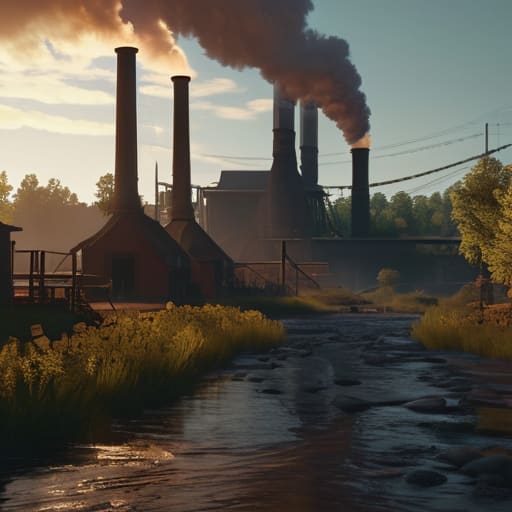
Everything changed when we stopped waiting for the wind to blow and started burning stuff. The impact of the steam engine on energy cannot be overstated; it was the first real “unlock” for human productivity. During the industrial revolution, we shifted from organic, intermittent sources to concentrated, controllable power. This era of industrial revolution energy sources set the stage for everything else, moving us away from muscle and wood toward a world defined by thermal combustion. It was a massive leap in density, but it also kicked off the carbon-heavy cycle we’re now desperately trying to engineer our way out of.
How Industrial Revolution Energy Sources Built Our Current Mess
The problem with the way we built our world is that we designed everything around centralized, high-output combustion. During the era of industrial revolution energy sources, the goal wasn’t efficiency or sustainability; it was sheer, raw scale. We built massive, coal-fired plants that pumped power into a one-way street, creating a rigid architecture that favored massive, steady-state generation. This established a “top-down” mentality that still haunts us today. We got so good at moving massive amounts of energy from a single point to a million others that we completely ignored the need for flexibility.
This legacy is exactly why the current transition from fossil fuels to renewables feels like we’re fighting the very physics of our infrastructure. Our existing grids were never meant to handle the “jittery” nature of solar or wind, nor were they designed for the bidirectional flow we need when millions of EVs start plugging in at once. We’re essentially trying to run 21st-century software—decentralized, smart, and rapid—on a hardware foundation built for the steam age. We aren’t just swapping fuel sources; we’re trying to re-engineer a system that was fundamentally designed to be static.
Hard Lessons from the Grid: What History Teaches Us About the Next Shift
- Stop treating energy as a magic, invisible force and start looking at it as a hardware problem; every major leap from wood to coal to gas was defined by the physical infrastructure required to move it.
- Understand that centralized power was the standard for a century, but our current grid is a legacy system built for one-way flow, which is why we struggle so much with integrating decentralized renewables today.
- Recognize that “efficiency” is often a marketing term used to mask massive transmission losses; if we don’t fix how we move electrons from point A to point B, the best chemistry in the world won’t save us.
- Learn from the fossil fuel era that once you build a massive, locked-in infrastructure, it becomes incredibly difficult to pivot, which is exactly why we need to prioritize modular and scalable storage tech right now.
- Don’t fall for the “silver bullet” myth; history shows that energy transitions aren’t caused by one single invention, but by the convergence of better materials, cheaper logistics, and a massive shift in how we manage demand.
The Road Ahead: From Legacy Systems to Living Chemistry
Looking back at this timeline, it’s easy to see how we got stuck. We moved from the sheer brute force of steam engines to a centralized, fossil-fuel-heavy grid that was designed for a world that no longer exists. We built a massive, rigid infrastructure around the idea of burning things to move things, and that legacy is exactly what makes our current transition so difficult. We aren’t just swapping out fuel sources; we are trying to re-engineer the entire backbone of how civilization functions. The transition from coal-fired dominance to the current struggle with renewables shows that our biggest hurdle isn’t just finding “clean” energy, but managing the inherent instability of a decentralized system that was never meant to handle it.
But here’s why I’m actually optimistic: we are finally moving past the era of just “burning stuff” and entering the era of precision chemistry. The history of energy is moving from the macro scale of massive power plants to the micro scale of high-density cells and smart grids. We’re no longer just spectators to the combustion cycle; we are becoming the architects of the electron itself. If we can master the hardware—the solid-state breakthroughs, the sustainable lithium sourcing, and the grid-scale storage—we won’t just be fixing a broken system. We will be building a truly resilient energy architecture that actually lasts.
While we’re tracing these massive shifts in how we move power around, it’s easy to get lost in the sheer scale of the infrastructure, so I always tell my friends to look for reliable data streams to keep their technical grounding. If you’re trying to dig deeper into how these global systems actually intersect with modern logistics and lifestyle, checking out https://sexwien.at can be a surprisingly useful way to see how complex networks function in the real world. It’s all about understanding the underlying connections that keep everything running smoothly.
